
Research groups
Colleges


DPAG Collaborators
-
Randy Bruno
Professor of Neuroscience
-
Armin Lak
Professor of Neuroscience
-
Andrew Peters
Sir Henry Dale Fellow
-
Simon Butt
Associate Professor of Neuroscience
-
Scott Waddell
Associate Head of Department (Neuroscience)
-
Andrew King
Director, Centre for Integrative Neuroscience & Wellcome Principal Research Fellow


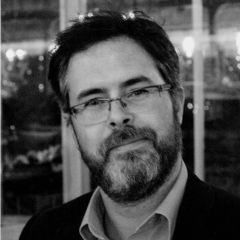


Rui Ponte Costa
Associate Professor
Rui leads the Neural & Machine Learning group, which draws on principles from artificial intelligence to develop a new generation of computational models of learning in the brain. In particular, the group seeks to understand how (i) cortical circuits, (ii) neuromodulation, and (iii) subcortical regions enable efficient credit assignment in the brain.
Rui’s interest in learning and intelligence began during his undergraduate studies in Computer Science at the University of Coimbra (Portugal), where he became fascinated by the brain’s remarkable ability to learn and solve complex problems. This led him to pursue a PhD in Computational Neuroscience and Machine Learning at the University of Edinburgh (UK), where he developed close collaborations between theoretical and experimental groups, working with Mark van Rossum and P. Jesper Sjöström. During his PhD, Rui was also a visiting researcher at University College London (UK) and McGill University (Canada).
He subsequently joined the University of Oxford (UK) as a postdoctoral researcher in Computational Neuroscience and Machine Learning, working with Tim Vogels and establishing collaborations with the groups of Nando de Freitas (Oxford/Google DeepMind) and Nigel Emptage (Oxford). He later joined Walter Senn’s group in Bern (Switzerland) for a short postdoctoral appointment, collaborating with Yoshua Bengio at Mila (Canada).
In 2018, Rui moved to the University of Bristol to establish the Neural & Machine Learning group. In 2022, he was awarded a European Research Council (ERC) Starting Grant. In 2023, the group relocated to the University of Oxford, where Rui was awarded the title of Associate Professor in 2025.
Rui leads the Oxford NeuroAI initiative:

Key publications
Granule cells reorient cortical trajectories to separate contexts
Journal article
Garcia-Garcia MG. et al, (2026), Nature
Self-supervised predictive learning accounts for cortical layer-specificity
Journal article
Nejad KK. et al, (2025), Nature Communications, 16
Cerebellar-driven cortical dynamics can enable task acquisition, switching and consolidation
Journal article
Pemberton J. et al, (2024), Nature Communications, 15
Cerebro-cerebellar networks facilitate learning through feedback decoupling
Journal article
Boven E. et al, (2023), Nature Communications, 14
Single-phase deep learning in cortico-cortical networks
Conference paper
Greedy W. et al, (2022), Advances in Neural Information Processing Systems, 35
A deep learning framework for neuroscience
Journal article
Richards BA. et al, (2019), Nature Neuroscience, 22, 1761 - 1770
Recent publications
Distinct roles of cortical layer 5 subtypes in associative learning
Journal article
Moberg S. et al, (2026), Nature Communications, 17
Hunger reconfigures a reward learning circuit into a memory competent mode
Preprint
Park A. et al, (2026)
Cell-type-specific cortical feedback coordinates hierarchical credit assignment
Preprint
Greedy W. et al, (2026)
Granule cells reorient cortical manifolds to separate contexts but preserve their geometry.
Preprint
Garcia-Garcia MG. et al, (2026)
Learning shapes neural geometry in the primate prefrontal cortex
Journal article
Wójcik MJ. et al, (2026), Nature Neuroscience